Italian Eco-Friendly Plasters
Both of our brands build from nature rather than around it. That's not a marketing line for us — it's the actual formulation choice behind every product STRATA imports: lime and marble from Stucco Italiano, sustainable cork from Diasen.
Rooted in Nature
Stucco Italiano formulates its Mineral Plasters range from natural slaked lime and reclaimed marble, with synthetic additives kept below 2.5% and VOC values close to zero — the range is virtually free of Volatile Organic Compounds. Diasen builds its insulation and finishing systems around sustainable cork. The result is decorative material that performs — breathable, durable, and kind to the spaces people live in.
Talk to Our Team
Stucco Italiano is a Socio (Member) of Green Building Council Italia — the national chapter of the World Green Building Council.
The Chief Ingredient
Together with marble, lime is the chief ingredient of the Mineral Plasters line. It's prized in sustainable construction for reasons that go well beyond aesthetics.
Lime is a natural product and does not contain harmful chemicals or toxins.
It allows moisture to evaporate rather than trapping it, balancing humidity in a room and reducing the risk of mould and respiratory issues.
With a naturally high pH (12+), lime inhibits the growth of mould and bacteria, even in hot, humid environments.
For years after application, lime continues absorbing and storing CO2 from the air through a slow process called carbonation.
Lime is produced at much lower temperatures than cement, making it a meaningfully more sustainable binder.
Volatile Organic Compound content across the range sits close to zero (<0.01%), and the line is free of formaldehyde-releasing agents.
Beauty
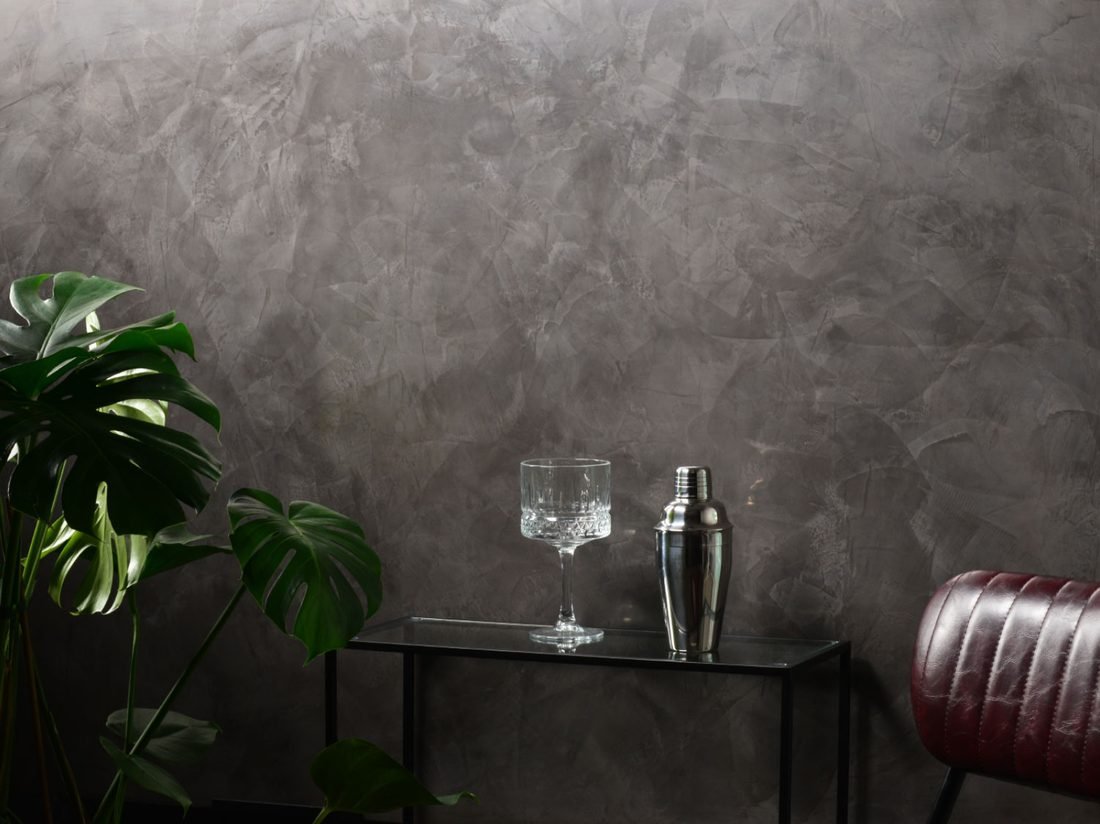
Lime has a living beauty that acrylic and other synthetic binders can't replicate. The subtle variation in texture and colour typical of lime-based finishes reflects light in a soft, diffused way, and the surface ages gracefully — acquiring a patina that adds depth and character rather than simply wearing out.
Durability
Lime built Roman concrete and lined the walls of Venetian Renaissance palaces still standing today. Its breathability lets moisture evaporate instead of accumulating, its porosity makes it more flexible and less prone to cracking than cement, and its high pH acts as a natural fungicide — unlike clay or gypsum plasters, lime doesn't soften or dissolve on contact with water.
100% Natural Version
For projects that call for exclusively natural materials, three finishes from the Mineral Plasters range are also available in an even more ecological version — every synthetic component replaced with natural alternatives like casein and shellac. Supplied in powder form and diluted before use, they need no preservatives at all.

Traditional medium-sheen Venetian plaster, reformulated with natural binders in place of synthetic ones.

The Green Line version replaces Portland cement with Natural Hydraulic Lime (NHL), further reducing its carbon footprint.

The traditional Moroccan waterproof plaster, in a version built entirely from natural ingredients.
All three Green Line finishes pair with natural protective treatments — Marseille Soap, Natural Beeswax, EcoTop (a vegetable oil blend), and Moroccan Olive Soap.
Our Commitment
How Each Brand Builds Green
Stucco Italiano
Venetian plasters and marmorino formulated from lime and natural mineral bases with minimal synthetic content — breathable finishes that regulate humidity rather than trap it, the way traditional Italian lime plasters always have.
Diasen
Diasen's insulation, finishing, and waterproofing systems are engineered around sustainable cork — a renewable, naturally insulating material that cuts embodied carbon compared to conventional synthetic alternatives.
Specifying For Sustainability?
We can share formulation and certification documentation for either brand so you can specify with confidence.
Contact STRATA